
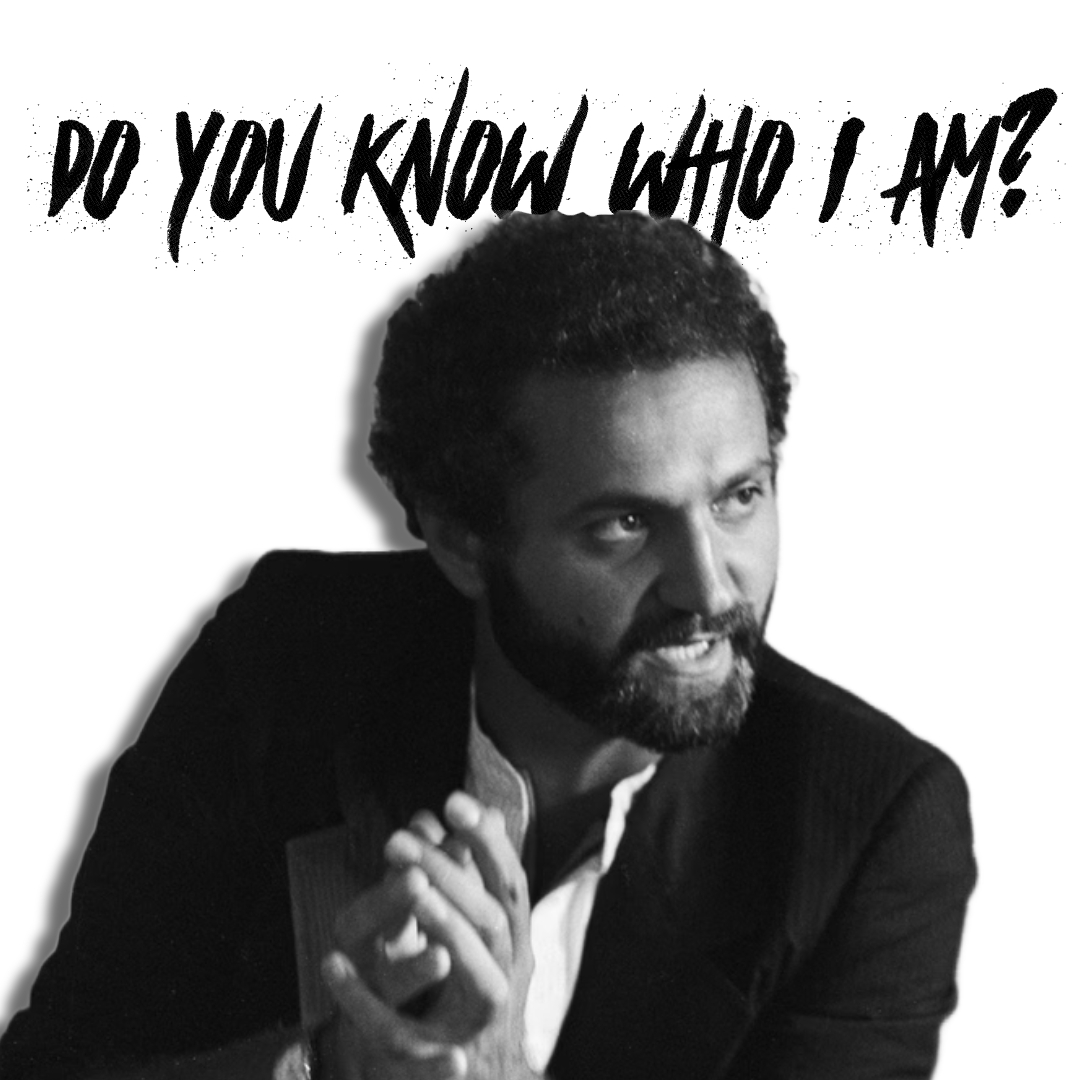
Who he is: Gianni Versace revolutionized the fashion world on many levels through his provocative collections, innovative textiles, and groundbreaking designs. Beyond fashion, he became a cultural icon, celebrated not only within the industry but also among celebrity and LGBT communities. Drawn to glamour, stars, and spectacle, Gianni was known for his extroverted personality and magnetic presence. The founder, creator, and creative force behind the Versace empire was also part of the legendary “Milanese Quartet,” alongside Giorgio Armani, Miuccia Prada, and Valentino. Together, they represented the pinnacle of Italian fashion, while Gianni himself came to embody luxury, opulence, sensuality, and excess.
Born in Reggio Calabria on December 2, 1946, Giovanni Maria Versace was immersed in the world of couture from a very young age thanks to his mother’s dressmaking atelier. This early exposure allowed him to develop his artistic sensibility and acquire his first skills in fashion. After periods of training in Paris and London, he moved to Milan in 1972. At just 26 years old, he began his professional career as a stylist at Florentine Flowers. He later worked as a freelance designer, lending his talent to several Milanese ready-to-wear companies, including the Italian label Genny, before founding Versace in 1978 alongside his sister Donatella Versace and brother Santo Versace. As the father of the House of Versace, Gianni created some of fashion’s most unforgettable silhouettes and iconic designs.
Tragedy struck on July 15, 1997, when Gianni Versace was murdered outside his Miami residence. His death plunged both the fashion world and the global LGBT community into profound mourning. They had lost not only a visionary designer, but also an icon, a role model, and a pioneer whose influence extended far beyond clothing.
What he does: Gianni quickly transformed Versace into a global luxury empire, expanding beyond fashion into perfumes, accessories, jewellery, watches, and home décor. Renowned for his bold, glamorous, and colourful aesthetic, he revolutionised fashion throughout the 1980s and 1990s with collections that combined luxury, sensuality, and artistic inspiration. Versace did not simply follow trends; he created them. He was among the first designers to introduce leather, bondage-inspired elements, and powerful silhouettes into high fashion, while forging close relationships with artists, performers, and celebrities such as Elton John and Madonna. His innovative vision earned him numerous distinctions, including the title of Commander of the Order of Merit of the Italian Republic. His influence reached its peak during the 1990s, when his creations became synonymous with glamour and celebrity culture, notably after Elizabeth Hurley wore the now-iconic black safety-pin dress in 1994.
Beyond fashion, Versace was deeply passionate about art, architecture, and design, passions reflected in both his collections and his lavish residences. Despite being diagnosed with cancer in 1996, he continued to create and inspire until his death in 1997. Today, Gianni Versace remains one of the most influential designers in fashion history, remembered for redefining luxury and leaving an enduring legacy on the industry.
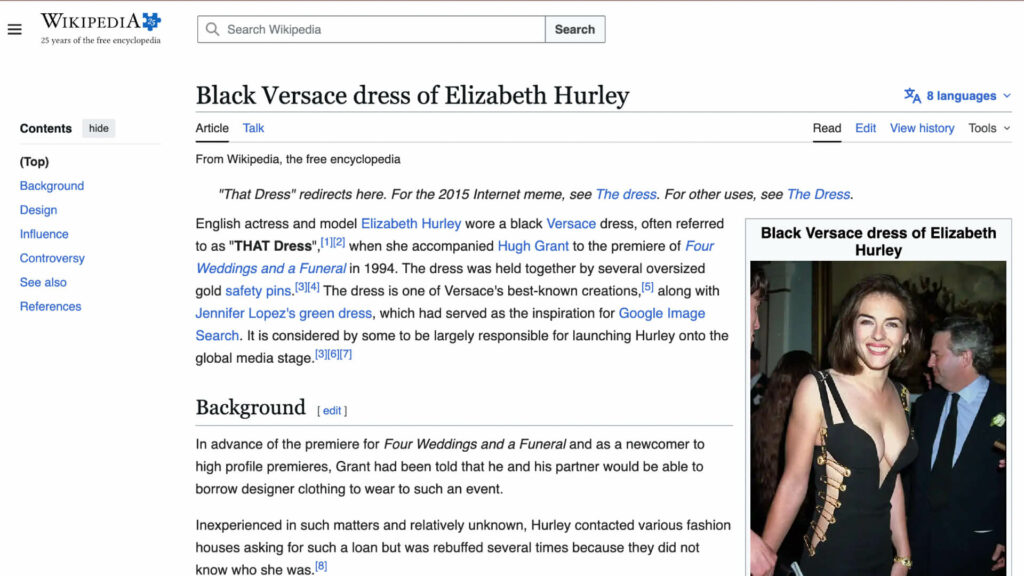
Fun fact: Simply known as “That Dress,” the black Versace gown worn by Elizabeth Hurley in 1994 marked a turning point in celebrity and couture culture, becoming one of the most iconic red-carpet moments of all time. Fittingly, the Medusa heads adorning each pin seemed to petrify everyone who laid eyes upon it. More than thirty years after its debut, the dress remains one of the most referenced looks in fashion history. Continuously revisited in exhibitions, editorials, and popular culture, it demonstrates Gianni Versace’s extraordinary ability to create garments that transcend fashion and become enduring cultural symbols.
Artistic Direction and Vision
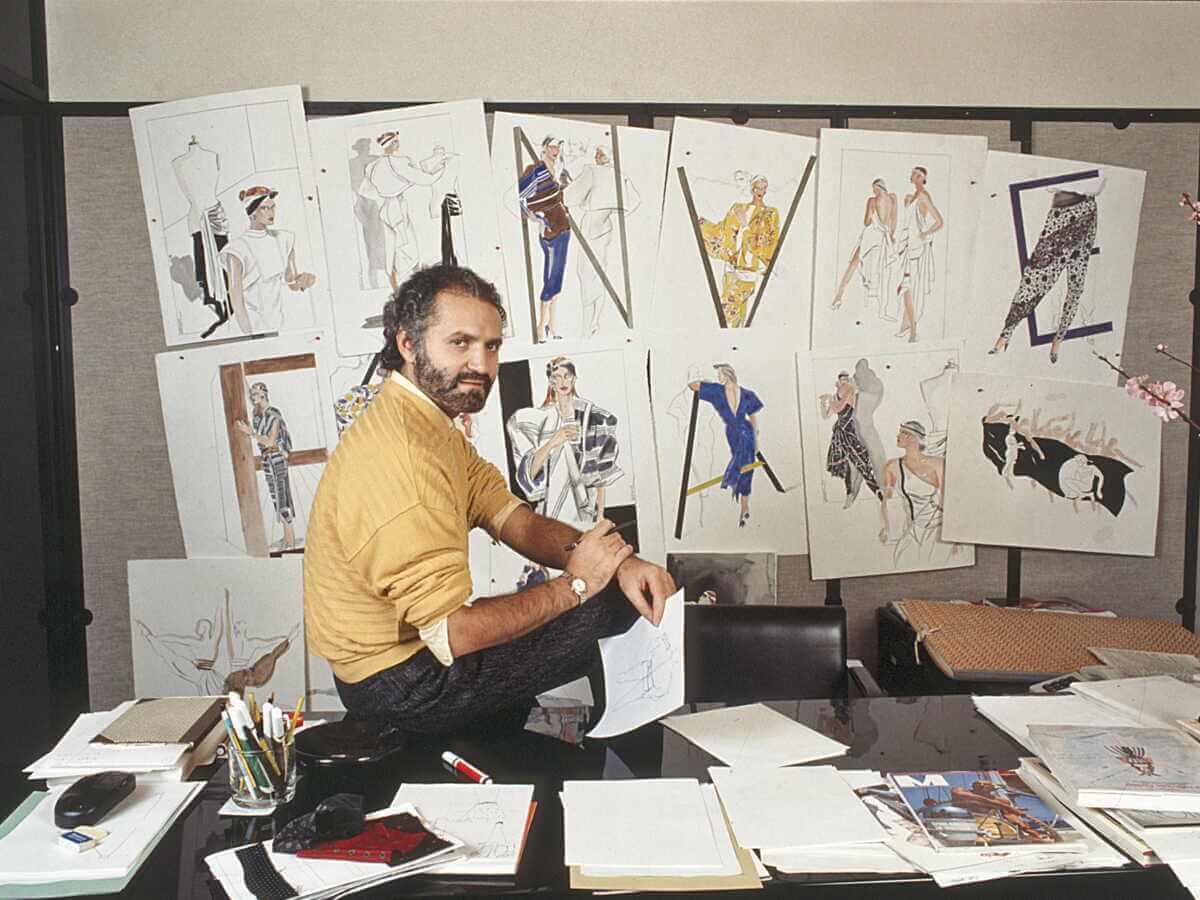
Gianni Versace shaped a vision of fashion defined by glamour, sensuality, and bold artistic expression. Unlike minimalist designers, he embraced excess, colour, and strong visual impact. His work celebrated the body and transformed clothing into a form of spectacle, blending references to classical art with contemporary pop culture. Versace became especially influential throughout the 1980s and 1990s, helping define an era associated with luxury, fame, and confidence.
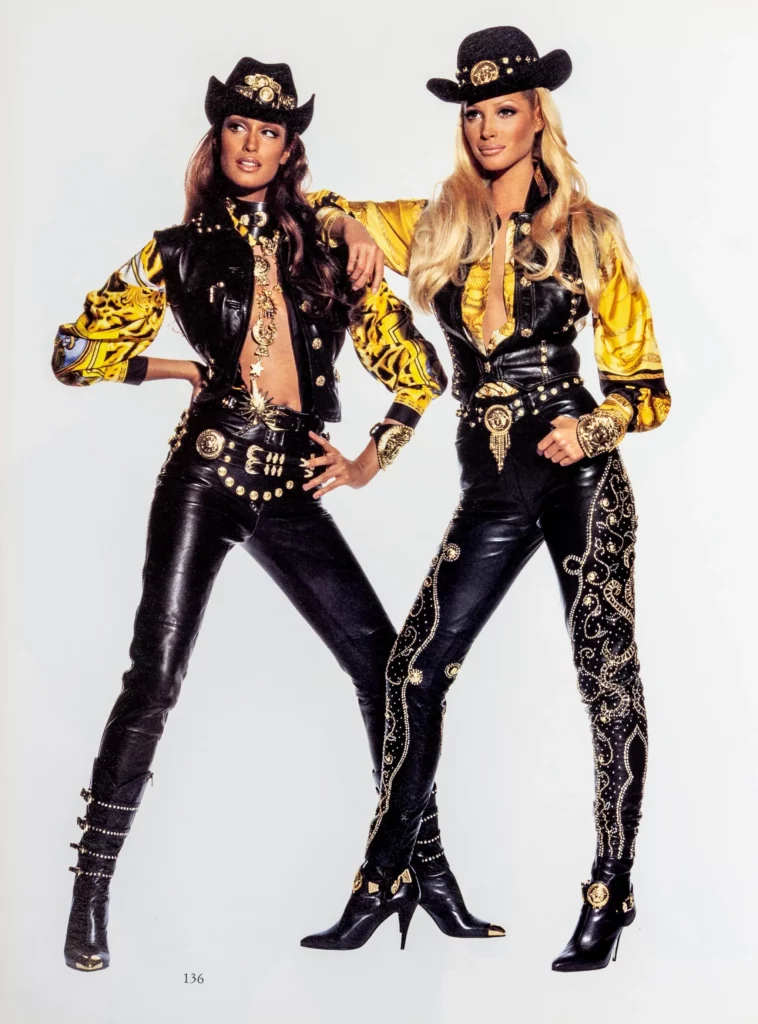
Versace’s designs were instantly recognisable: vibrant colours, baroque motifs, gold embellishments, and daring silhouettes became signatures of the house. He was among the first designers to bring fashion closer to celebrity culture, dressing icons such as Elizabeth Hurley and the supermodels who came to embody the “supermodel era.” His fashion was not about subtlety but about impact, transforming runway shows into theatrical productions where clothing itself became performance.
For Versace, fashion was deeply connected to art, music, and performance. He collaborated with artists, musicians, and performers such as Elton John, creating costumes for stage productions, opera, and ballet. His work often drew inspiration from classical mythology, Renaissance art, and ancient Roman aesthetics, which he reinterpreted into contemporary luxury fashion. Through his collections, he told stories of power, beauty, and desire. The legacy of Gianni Versace is rooted in his transformation of fashion into a symbol of global pop culture. He helped redefine luxury as something bold, visible, and expressive rather than discreet. He expanded the Versace brand into perfumes, accessories, home décor, and lifestyle products, turning it into a global empire.
Despite his tragic death in 1997, his influence remains strong. The House of Versace continues to embody his aesthetic vision. His legacy is also carried forward by his sister Donatella Versace, who preserved and evolved his creative identity. Today, Gianni Versace is remembered as a designer who made fashion theatrical, powerful, and unapologetically expressive, turning glamour into a cultural language.
Heritage
Even after his death, and despite his sister Donatella carrying the torch for nearly thirty years and taking Versace into a new era, Gianni remains, for many, the soul of the House. He is the reason for Versace’s existence. A true fashion visionary, he was the first designer to receive the Grand Vermeil Medal of the City of Paris, an honorary distinction recognising major figures in culture. Versace was also one of the first designers to transform fashion shows into true spectacles, blending fashion, music, and entertainment in presentations that could last up to forty minutes. He was, above all, a true showman.
Gianni Versace’s influence reached far beyond the fashion world, leaving a lasting mark on popular culture and luxury design. Renowned for his bold vision and innovative spirit, he revolutionised the runway by turning fashion shows into grand cultural events. Although the brand continued under Donatella Versace’s leadership after his death, Gianni remains the creative force behind Versace’s identity and enduring success.
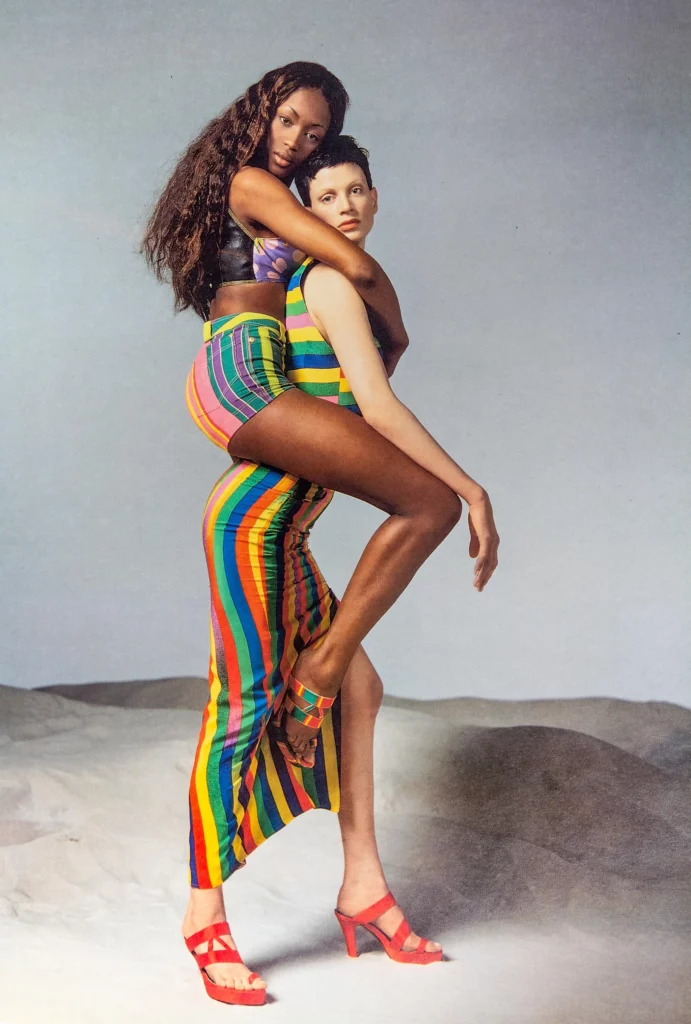
Personal Style
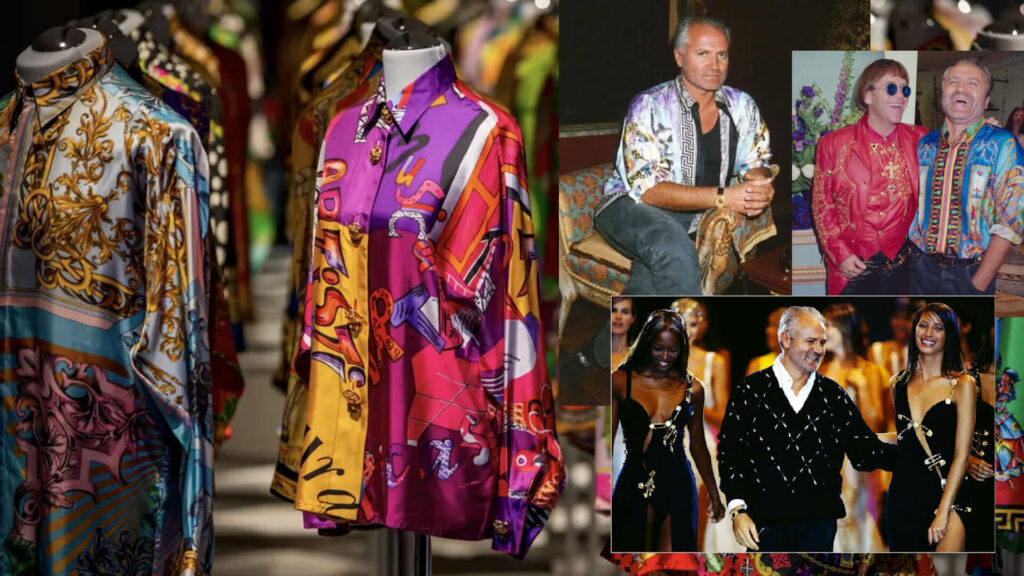
Gianni Versace was not only elegant on the catwalk but also in everyday life. He cultivated a refined and sophisticated wardrobe, often wearing impeccably tailored shirts, trousers, and loafers. Gianni embodied a charismatic and distinctly Italian sense of style. He also had a passion for statement watches, rich patterns, and luxurious details. Unlike his contemporary Giorgio Armani, who favoured understated dressing, Gianni embraced a more expressive and flamboyant aesthetic, always presenting himself at his very best.
Controversiality
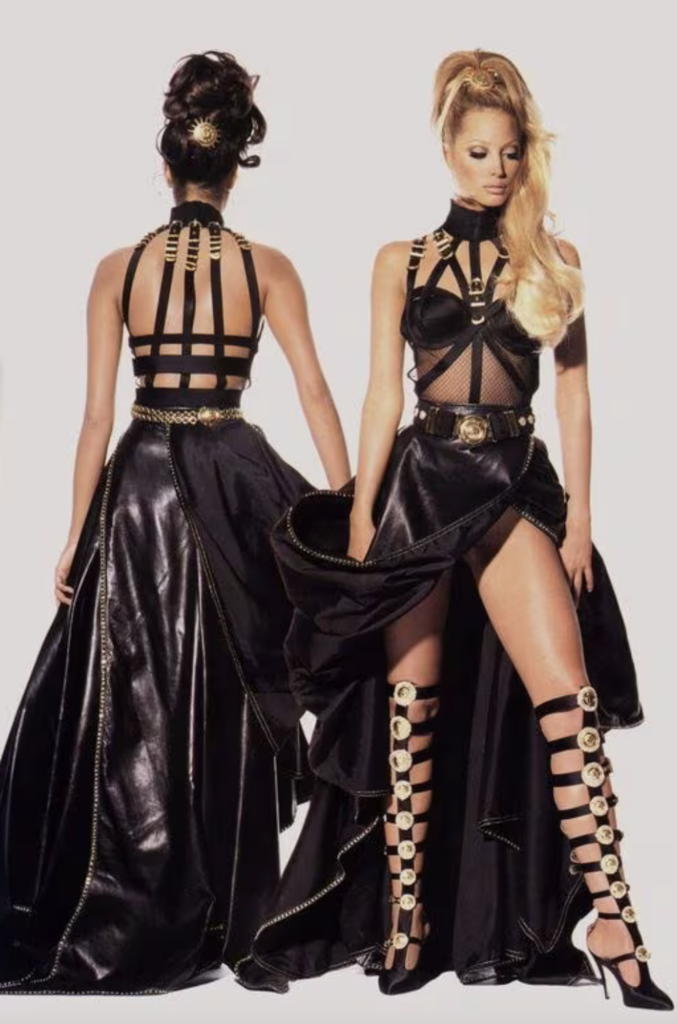
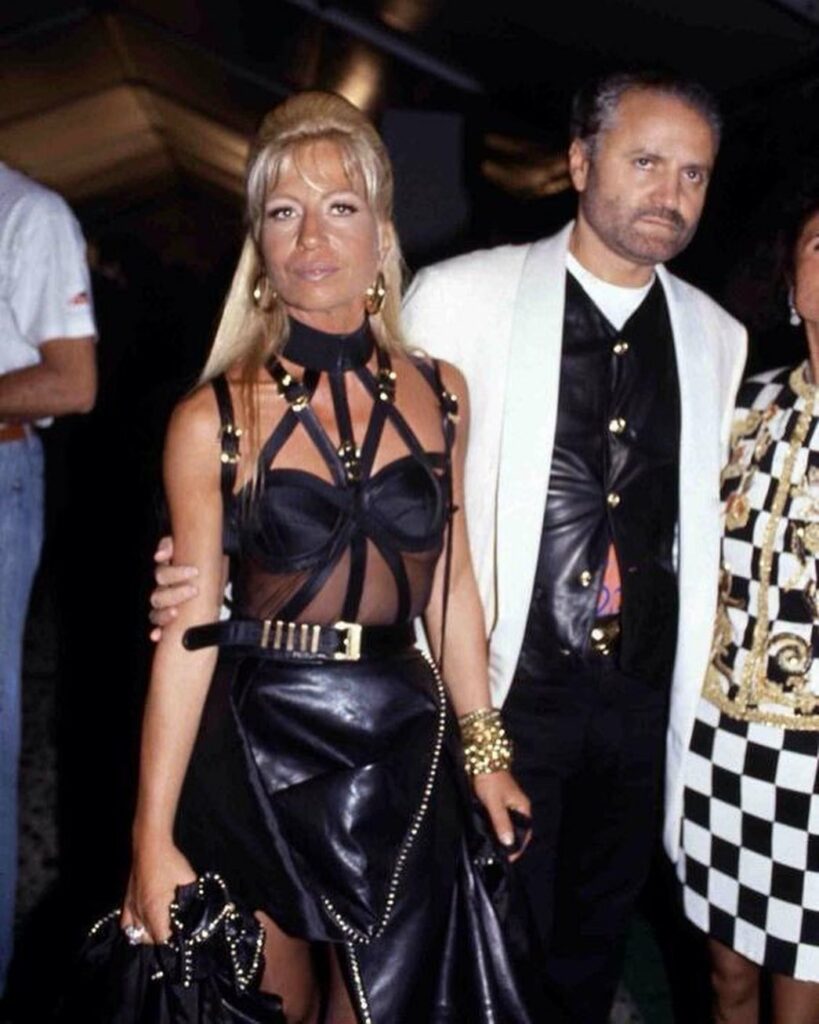
Mr. Versace never experienced any major public controversy, although his work often pushed the boundaries between artistic expression and provocation, as seen in his Fall/Winter 1992–1993 collection, the so-called “Bondage Collection,” characterised by leather looks and structured harness detailing. Despite its provocative nature, he maintained a relatively stable public image.
At times, however, his openness and visibility attracted criticism. In an era when it was far less accepted, Gianni Versace became an important figure and role model for the LGBT community. He lived openly as a gay man and supported AIDS research, actions that, while meaningful, were sometimes met with public criticism and misunderstanding. Although he faced negative reactions from certain segments of society, Versace ultimately became a symbol of visibility and confidence for many young people within the community, helping to foster a sense of empowerment and self-expression through his work and public presence.
Most Known For
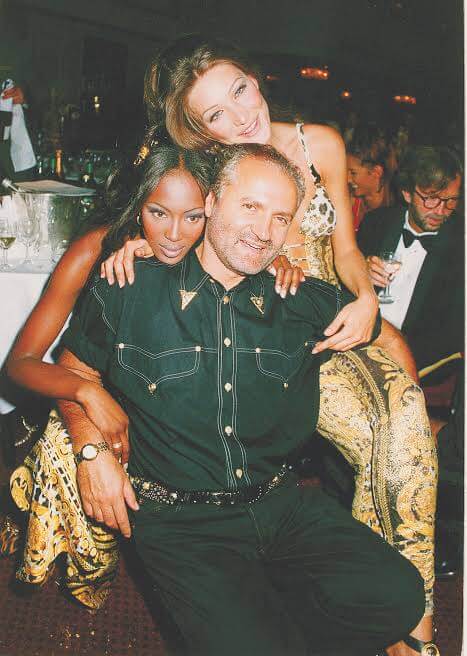
Over the years, Gianni Versace has become a true icon of Italian luxury. Through sensual, daring, and highly distinctive designs, he left a lasting imprint on the global fashion landscape.
From parade to full show: Gianni Versace was a true visionary, among the first designers to fully merge music and fashion, influenced in part by his close relationships with artists such as Elton John. His runway presentations were immersive experiences, set within a highly charged atmosphere. One of the most famous took place on March 7, 1991, in Milan, where for 47 minutes he presented 19 models wearing a total of 109 looks for his Autumn/Winter 1991–92 collection.
His treatment of models: Gianni Versace was among the first designers to elevate models to celebrity status, placing them at the centre of his shows and campaigns. He famously brought together icons such as Naomi Campbell, Cindy Crawford, and Linda Evangelista, who became defining figures of the supermodel era. His highly publicised shows and glamorous aesthetic transformed modelling into a cultural phenomenon, with many crediting him as one of the creators of the “supermodel” era.
A strong brand identity: Gianni Versace established a brand identity rooted in ostentatious luxury, sensuality, and a strong dialogue with classical art and mythology. The House of Versace is defined by bold motifs such as the Medusa head, vibrant colour palettes, and instantly recognisable baroque prints. Its aesthetic blends glamour, provocation, and confidence, projecting a powerful and theatrical vision of Italian fashion.
Least Known For
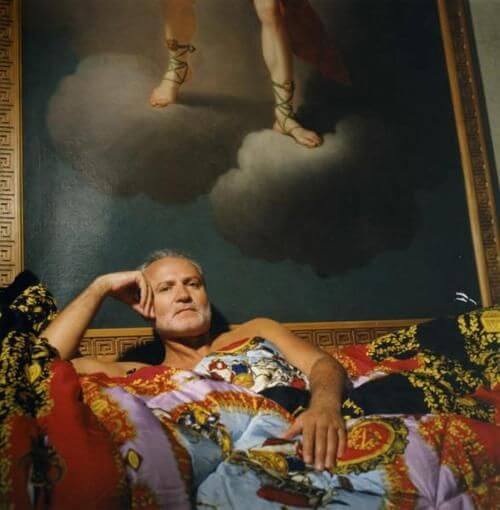
While Gianni Versace is widely associated with extravagant fashion, supermodels, and celebrity culture, several aspects of his life and work are less often highlighted.
His interest in Greek antiquity: Growing up in Reggio Calabria, a region shaped by the legacy of Magna Graecia, he developed a deep fascination with ancient art. The Medusa head logo originates from this cultural influence. Many of his collections, particularly Spring/Summer 1992, reflect references to Greek aesthetics through draping, metallic accents, and classical forms reinterpreted in a modern context.
His influence on interior design: Versace’s creative vision extended beyond clothing into interior design, where he developed home collections combining furniture, textiles, and décor in the unmistakable Versace style. This luxurious aesthetic is also reflected in his Miami residence, the Villa Casa Casuarina, now as famous as some of his runway collections, characterised by ornate detailing, bold patterns, and gilded interiors.
His informal training: Unlike many designers who attended formal fashion institutions, Gianni Versace learned his craft directly in his mother Francesca Versace’s dressmaking workshop, where he developed his foundational skills and artistic sensibility.
Gianni Versace is a Sagittarius: and it is reflected in his expansive, visionary, and boundary-pushing approach to fashion. Sagittarius energy is bold, adventurous, and driven by a desire for spectacle and storytelling, qualities that are evident in his theatrical runway shows and fearless embrace of excess. His work carries this fire-sign dynamism: expressive, optimistic, and unafraid of scale, where fashion becomes a space for freedom, drama, and cultural exploration. Guided by intuition and vision, Gianni’s creative world embodies a sense of limitless imagination and radiant confidence, built on a belief that fashion should inspire, provoke, and captivate.
Author Paul Schwoerer
I am young fan of fashion. I sew, I create and I think about clothes. In the future I want to create my own brand with my best friend.